
What Does Iran Have to Do With the Bible? Persia, Prophecy, and God’s Sovereignty
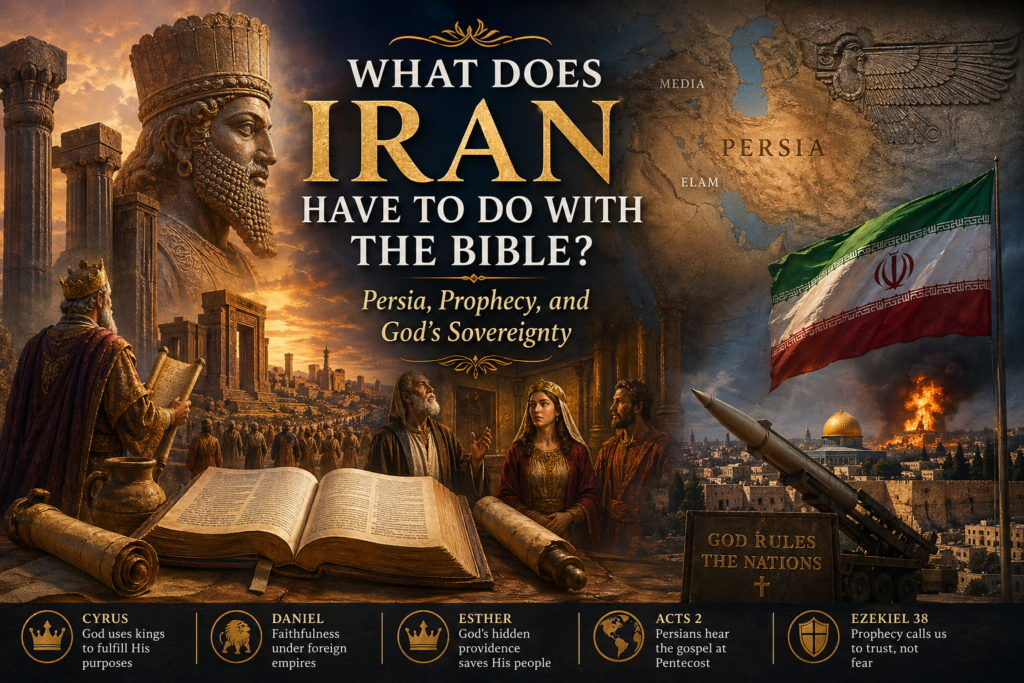
Iran’s connection to the Bible begins with ancient Persia, a major empire woven throughout Scripture through Cyrus, Daniel, Esther, Ezekiel, and Acts. This article explains how Persia appears in biblical history, why Christians should avoid sensational prophecy claims, and how Scripture presents God as sovereign over nations, kings, empires, and the unfolding mission of the gospel.
Why Are There So Many Bible Translations? A Clear Christian Guide
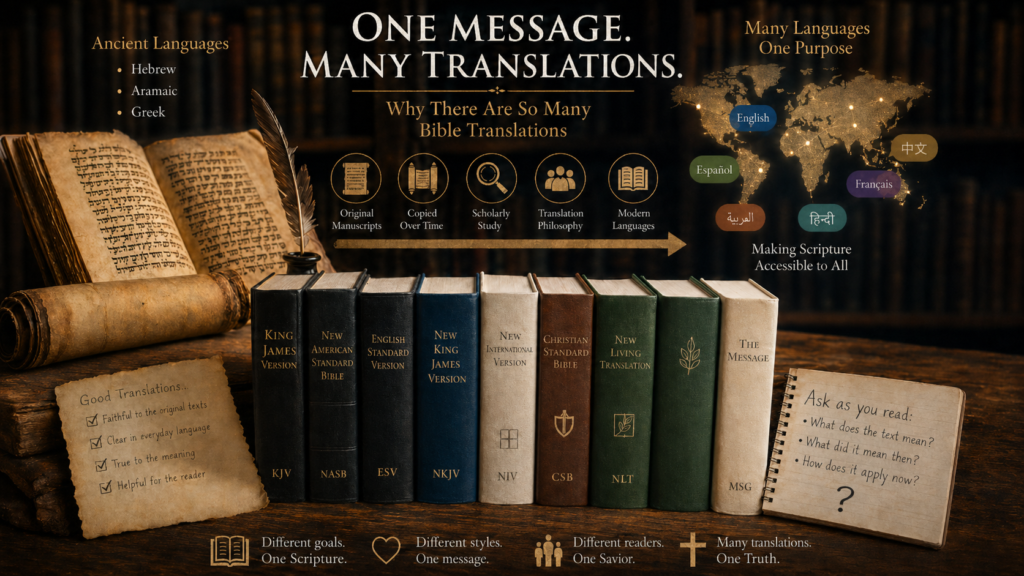
Many Christians wonder why there are so many Bible translations if Scripture is one unified message. This article explains how ancient languages, manuscript history, changing English, translation philosophy, and reader needs all shape modern Bible versions. Learn the difference between word-for-word, thought-for-thought, and paraphrase translations—and how to choose the right Bible for study, devotion, and faithful understanding.
Human Enhancement and the Question of Identity

Transhumanism promises longer life, greater knowledge, reduced suffering, and enhanced human capacity. Yet beneath these aspirations lies a deeper question: what does it truly mean to be human? This article places transhumanist thought in critical dialogue with theological anthropology, exploring dignity, limitation, transcendence, and the future of human identity.
World Religions Explained: Beliefs, Origins, Practices, and Global Influence
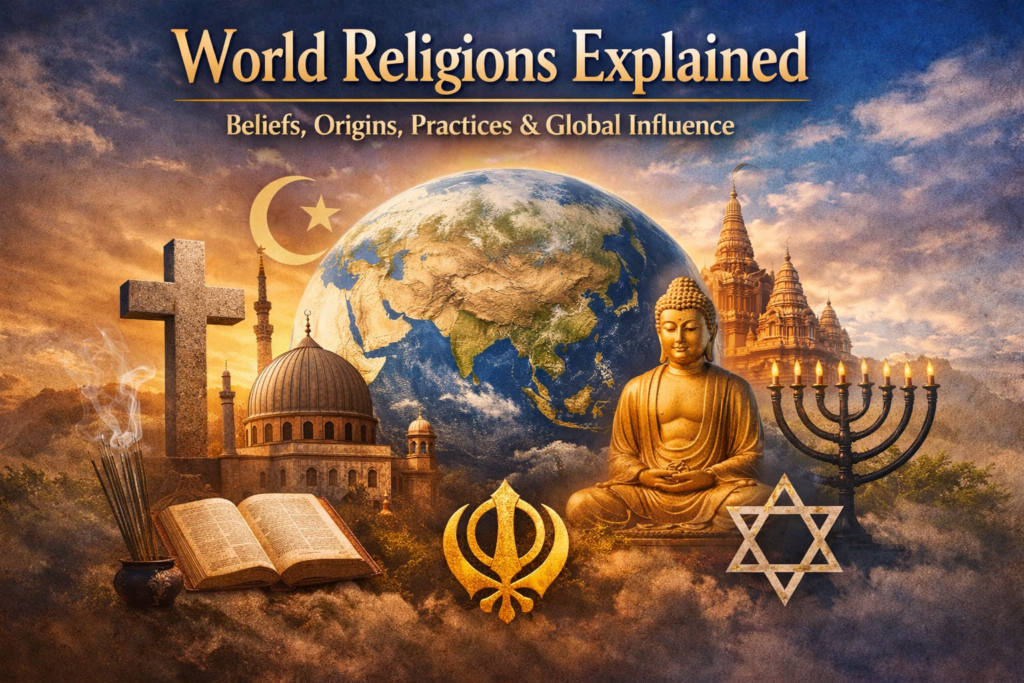
Explore the major world religions, their origins, beliefs, practices, sacred texts, and global influence in this research-based guide to faith traditions.
Discover how Christian denominations were created through church history, from the early church and Great Schism to the Protestant Reformation and modern theological differences.

This historical-style illustration depicts the development of Christian denominations through key moments in church history. It highlights the unity of the early church, the division between Eastern Orthodox and Roman Catholic traditions during the Great Schism of 1054, and the Protestant Reformation that led to the formation of modern denominations such as Baptist, Presbyterian, Anglican, Methodist, and Pentecostal. The image visually communicates how theological, cultural, and historical factors contributed to the growth of denominational diversity within Christianity.
Systematic Theology Handbook for Beginners

Systematic theology study scene with open Bible, ancient manuscripts, and theological symbols representing Christian doctrine and biblical truth