
Why Are There So Many Bible Translations? A Clear Christian Guide
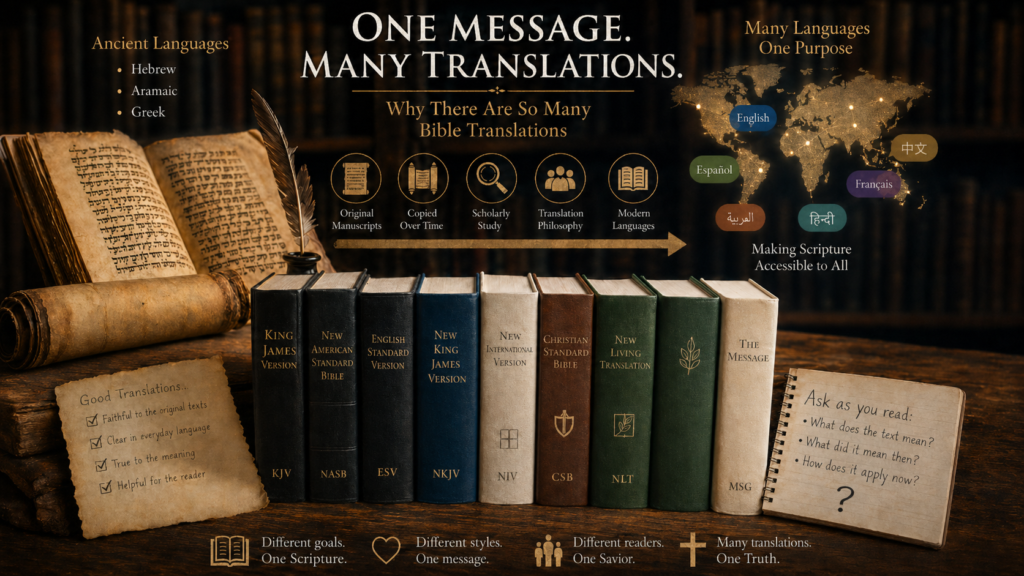
Many Christians wonder why there are so many Bible translations if Scripture is one unified message. This article explains how ancient languages, manuscript history, changing English, translation philosophy, and reader needs all shape modern Bible versions. Learn the difference between word-for-word, thought-for-thought, and paraphrase translations—and how to choose the right Bible for study, devotion, and faithful understanding.
Discover how Christian denominations were created through church history, from the early church and Great Schism to the Protestant Reformation and modern theological differences.

This historical-style illustration depicts the development of Christian denominations through key moments in church history. It highlights the unity of the early church, the division between Eastern Orthodox and Roman Catholic traditions during the Great Schism of 1054, and the Protestant Reformation that led to the formation of modern denominations such as Baptist, Presbyterian, Anglican, Methodist, and Pentecostal. The image visually communicates how theological, cultural, and historical factors contributed to the growth of denominational diversity within Christianity.